
About
Defining inquisigen: inquisitive (epi)genomics
inquisitive
adjective
tending to ask questions: having a desire to know or learn more
Next-generation sequencing technologies have enabled large-scale studies of biological processes and have led to major breakthroughs in scientific knowledge. However, extracting useful information from these massive datasets is not a simple task. Countless algorithms have been designed for the processing and analysis of such data. In addition to explaining observations, many statistical and machine learning-based methods strive to infer mechanisms and generate hypotheses.
However, with so many existing algorithms, finding the ideal pipeline for your specific data and application can be challenging. Moreover, inferences/predictions made by computational methods are not guaranteed to yield positive results upon validation in the laboratory. Inquisigen Consulting Inc. is positioned to provide computational services while addressing these two challenges:
- By keeping up-to-date with the latest state-of-the-art open source algorithms, we are able to prioritize quality and carefully tailor pipelines best suited to each unique project.
- By leveraging model ensembles (multiple models with different approaches to the same problem), we can maximize the likelihood of generating hypotheses that will lead to fruitful follow-up studies.
With an inquisitive mind, we can help you gain practical insights from (epi)genomic data.

Meet the founder
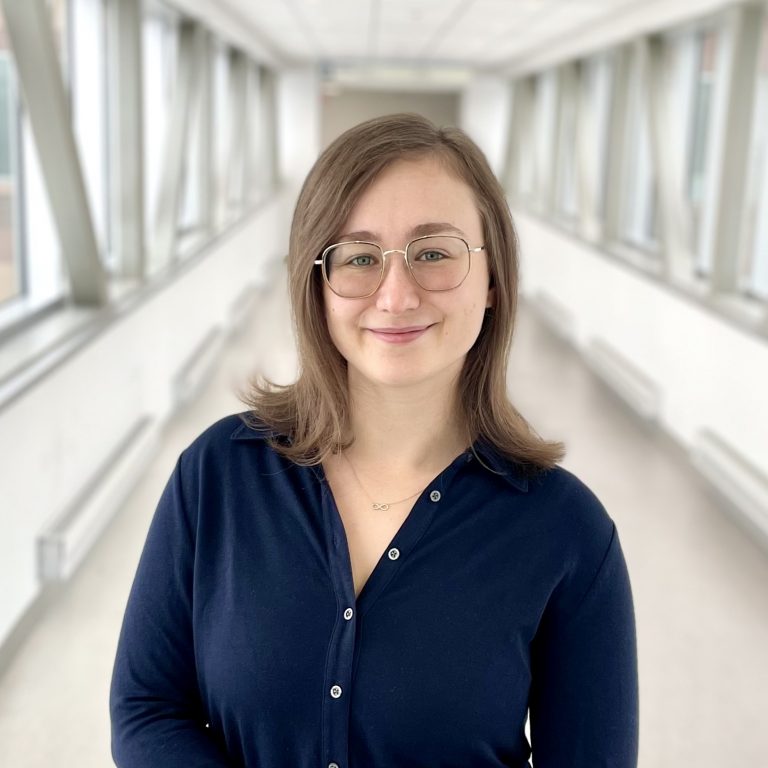
Orsolya Lapohos, PhD
Introduction
Orsolya is a computational biologist with a long-standing passion for science. Over the past decade, Orsolya’s curiosity allowed her to acquire experience in a wide range of domains, including microbiology, immunology, genomics, bioinformatics, statistics, network science, machine learning, and deep learning.
Today, she is still expanding her knowledge, and her inquisitive mindset drives her to constantly seek out new challenges. In facing these challenges, Orsolya enjoys applying approaches that balance evidence-backed solutions with a hint of creativity. She looks forward to working with and learning from other curious scientists!
An interdisciplinary skillset
Orsolya’s interdisciplinary experience has equipped her with skills in both the life sciences and quantitative/computational fields. This combination allows her to form effectively contextualized quantitative solutions in biological domains.
Life science / wet-lab
In vitro
Tissue processing, primary and immortalized cell culture, genotyping, cloning, qPCR, Western blotting, ELISA, flow cytometry, IHC, DNA/RNA/protein purification, bulk/single-cell RNA-seq, bulk ChIP-seq, bulk/single-cell ATAC-seq, single-cell multiome RNA+ATAC-seq
In vivo (mouse)
Cre-lox systems, breeding, ip/iv/in/it/sc administration, tissue collection
Quantitative / dry-lab
Computer programming and environments
Ubuntu/Mac OS/Windows systems, Linux server administration, shell scripting, Python, R
(Epi)genomic data processing and analysis
RNA-seq, ATAC-seq, ChIP-seq, PRO-seq, single-cell and spatial transcriptomics, single-cell multiome RNA+ATAC-seq, TCR/BCR-seq
Statistics and machine learning
Statistical inference, causal inference, network inference, linear models, support vector machines, decision trees, dimensionality reduction, feature extraction and normalization, clustering, manifold learning, ensemble methods, neural networks, convolutional neural networks, sparse autoencoders, variational autoencoders
Additionally, Orsolya is an effective science communicator, having practiced adapting to diverse audiences for many years. She also carefully considers data representations in order to visualize results in a meaningful and interpretable manner.
Academic experience in detail
HonBSc Microbiology & Immunology, McGill University
Orsolya’s first exposure to the rigorous scientific process in an academic research lab was in 2015, the first summer of her undergraduate degree. She learned techniques like tissue processing, primary cell culture, genotyping, qPCR, Western blotting, and ELISA in the laboratory of Dr. Joaquín Madrenas, where she participated in research centered on molecular mechanisms regulating mitochondrial function in T cells.
Later during her undergraduate years, she studied neutrophil extracellular trap-facilitated cancer metastasis in the lab of Dr. Lorenzo Ferri, adding IHC, proliferation, cytotoxicity, and NET-osis assays to her wet-lab skillset. Finally, she also spent a short time participating in dendritic cell micro-RNA research in Dr. Connie Krawczyk’s lab.
MSc Microbiology & Immunology, McGill University
Orsolya then spent her MSc studying mechanisms underlying BCG vaccine-induced expansion of hematopoietic stem cells under the supervision of Dr. Maziar Divangahi. During this time, she was trained on various murine in vivo procedures and she gained substantial experience with flow cytometry. As she was collecting loads of flow cytometry data and wanted to aggregate the data more efficiently, she refreshed her dormant coding skills and developed scripts to automate this process. Towards the end, she also learned how to process and analyze bulk RNA-seq data—a prelude to the next chapter in her academic journey.
PhD Quantitative Life Sciences, McGill University
At this point, she decided to pivot and spend her PhD years studying genomics, bioinformatics, and machine learning. In the first year, she rotated through 3 labs, learning new skills in several domains: wet-lab and dry-lab techniques for transcriptomics and epigenomics (Dr. Gregory Fonseca), statistics and machine learning applied to (epi)genomic data (Dr. Amin Emad), and single-cell RNA-seq data analysis and machine learning (Dr. Jun Ding).
Afterwards, Orsolya began her thesis research co-supervised by Dr. Gregory Fonseca and Dr. Amin Emad. During this time, she was involved in numerous research projects and collaborations in addition to her thesis work, such as:
- Reconstructing transcriptional regulatory networks driving macrophage phenotypes in vitro (BMDMs) and in a murine model of idiopathic pulmonary fibrosis.
- Studying the epigenome of macrophages in a murine model of muscular dystrophy via ChIP-seq (collaboration with Petrof lab).
- Studying regulatory B cells via re-analysis of publicly available genomic data, including BCR-seq and spatial transcriptomics (collaboration with Mazer lab).
Finally, her thesis work focused on refining sequence-to-expression modelling and its post hoc interpretation using chromatin accessibility. Through this, she has contributed open-source software available on GitHub.
Featured recent publications
AmalgaMo: flexible DNA motif merging
Orsolya Lapohos & Gregory J Fonseca
Bioinformatics Advances
2026
Refining sequence-to-expression modelling with chromatin accessibility
Orsolya Lapohos, Gregory J Fonseca, & Amin Emad
Bioinformatics
2026
For full list of publications, please see Google Scholar.
Goals and vision for Inquisigen
Currently, Orsolya works full-time as an AI Developer, but she enjoys participating in scientific projects part-time. Through Inquisigen, she aims to provide high-quality consulting services for research groups in need of tailored computational biology solutions.
In the future, she hopes to find like-minded individuals who would join Inquisigen and create a team of consultants, increasing the range of expertise that bolsters the provided services.